How-to
How to vacuum stairs with a cordless vacuum
Published
Note: This page contains affiliate links. If you buy through them we may earn a commission at no extra cost to you. Learn more
In short
Switch the stick vacuum to handheld mode, fit a mini motorised tool for carpeted treads and a crevice tool for the edges, and work from the top step down. Use eco or auto for most of the flight and boost only on the worst treads. On most machines one charge easily covers a single flight, with battery to spare.
Products for this job
Compare all 7 productsDyson V15 Detect Animal: Hair screw tool for treads
Check price on AmazonAffiliate linkDyson V10 Animal: mini motorised tool and 60 min
Check price on AmazonAffiliate linkDyson V8 Absolute: mini motorised tool and soft roller
Check price on AmazonAffiliate link
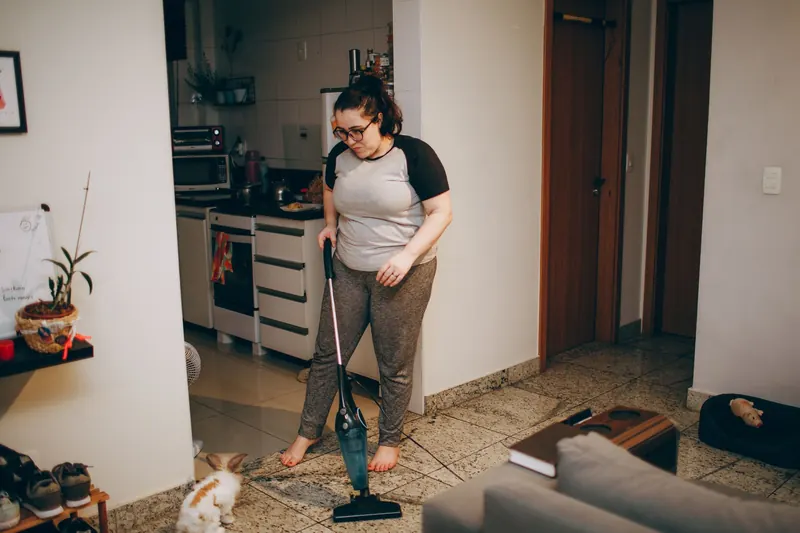
Stairs are where a cordless stick vacuum earns its place. There is no cable to snag on the banister, no heavy upright to balance on a narrow tread, and the main body lifts off the wand to become a handheld. Getting a good result still takes a little method. The tool you fit, the order you work in and the power mode you choose all affect how clean the stairs look and how much battery you use. This guide covers the handheld conversion, which attachment suits treads, risers and edges, power mode choices and a simple battery plan for a full flight, including tips for Shark and Dyson attachments.
Convert to handheld mode
Almost every cordless stick vacuum lets you remove the long wand so the motor, bin and battery become a compact handheld. On Dyson V-series machines you press the release button where the wand meets the cyclone and pull the wand away. On Shark stick vacuums you press the wand release near the handle and the hand unit lifts off. The exact button position varies by model, so check your manual if it is not obvious.
In handheld form you can fit tools directly to the main body. This keeps the weight in your hand and close to the step, which is easier on the wrist than holding a full-length stick at an angle. Lighter machines make a real difference here: the Shark Stratos Pet Pro is listed at 2.16 kg in use as a full stick, and the handheld unit alone weighs noticeably less. Our best lightweight cordless vacuums guide covers models that suit regular stair cleaning.
Choose the right tool for each part of the stair
A flight of stairs has three surfaces: the flat tread you walk on, the vertical riser and the corner where they meet along with the edges by the wall and spindles. Each needs a different tool. Using the right one saves time and battery.
| Part of the stair | Best tool | Why |
|---|---|---|
| Carpeted tread | Mini motorised tool | A small spinning brush lifts grit and hair from the pile |
| Riser | Combination or brush tool | Less dirt settles here; a light brush pass is enough |
| Back corner and edges | Crevice tool | Reaches the crease where dust collects |
| Spindles and skirting | Soft dusting brush | Lifts dust without marking paint |
| Hard wood or laminate stairs | Soft brush or combination tool | Avoids scuffing the finish |
- Dyson: many V-series kits include a mini motorised tool, and the V15 Detect Animal includes a Hair screw tool with an anti-tangle conical brush bar that is suited to stair treads.
- Shark: kits vary. The Stratos Pet Pro includes a crevice tool and a multi-surface tool, and some Shark kits add a pet tool. Check the box contents for your model.
- Samsung: the Bespoke Jet Plus Pro Extra lists a Pet Tool+ among its accessories.
- Other brands: if your machine came without a motorised mini tool, check the maker's accessory range for one that fits your model.
Step by step: vacuuming a flight of carpeted stairs
Working top to bottom means dust you dislodge falls onto steps you have not cleaned yet, rather than onto steps you have already done. Doing all the edges first with one tool, then all the treads with another, saves swapping tools on every step.
- 1
Empty the bin and check the battery is well charged before you start.
- 2
Clear the stairs of shoes, toys and loose items.
- 3
Convert to handheld mode and fit the crevice tool.
- 4
Starting at the top step, run the crevice tool along the back corner of each tread and down both edges. Work down the whole flight.
- 5
Swap to the mini motorised tool. Again starting at the top, clean each tread with slow, overlapping strokes from back to front.
- 6
Pull the tool towards you over the nose of each step, where wear and grit build up.
- 7
Use a brush or combination tool on the risers with a light pass.
- 8
Finish with a soft brush on spindles, handrail base and skirting if needed.
- 9
Empty the bin and clear any hair from the mini tool's brush with the machine switched off.
Power modes: eco, auto or boost?
Most treads only need eco or the auto mode where your machine has one. A mini motorised tool provides most of the agitation, so extra suction adds less than you might think. Save boost for the bottom step, the landing and any tread with ground-in dirt or a pet's favourite sleeping spot.
Automatic modes help here. Shark's Clean Sense IQ on the Stratos adjusts power when it senses dirt, and Dyson's V15 Detect raises suction when its piezo sensor counts more dust. On machines without auto, a short burst of boost on the worst treads, then back to eco, gives a good balance between result and battery.
A battery plan for a full flight
A typical straight flight of 12 to 14 steps takes a few minutes per pass with each tool. Even with a motorised tool, which draws more than a crevice tool, most mid-range and premium machines finish a flight well within one charge. The issue is doing the stairs after the rest of the house. If you clean all the floors first on boost, you may reach the stairs with little left.
Plan the order. Some people do the stairs first while the battery is full, as they need the most handheld work. Others clean downstairs, charge, then do upstairs and the stairs. Our runtime planner lets you add stair flights and minutes per flight alongside rooms to see whether one charge covers it. If you have two flights or a large carpeted home, a model with a removable second battery is worth considering; see our best cordless vacuums for stairs.
Note:Before clearing hair from a brush bar or mini tool, switch the vacuum off and, where possible, remove the battery. Do not use the vacuum if the battery pack is damaged, swollen or hot, and use only the maker's charger or a compatible one.
Safety on the stairs
Keep one hand free or close to the banister where you can. Stand on the step below the one you are cleaning so you are not reaching down past your feet. Put the long wand somewhere flat at the top or bottom, not leaning against the stairs where it can fall. With a handheld there is no cable to trip over, but loose accessories can be a hazard, so carry them in a pocket or a small bag rather than leaving them on the treads.
Frequently asked questions
Can I use the full stick on stairs instead of handheld mode? You can on wide, shallow treads, but the main floor head is often wider than a tread and awkward to angle. Handheld mode with a mini motorised tool is usually faster and gives a better result on carpeted stairs.
How do I use Shark cordless vacuum attachments on stairs? Release the wand to use the hand unit, then fit the crevice tool for edges and the multi-surface or pet tool for treads. Tools vary by kit, so check the contents list and manual for your model.
Is a handheld vacuum enough for carpeted stairs? A dedicated small handheld can work, but many lack a motorised tool or have short runtimes. A stick vacuum in handheld mode with a mini motorised tool usually has more power and battery for a full flight.
How often should I vacuum the stairs? Weekly suits most homes, with more frequent quick passes on the bottom few steps, which collect the most grit. Homes with pets often need more frequent cleaning of the treads.
What you need
- Check price on AmazonAffiliate link
Dyson V15 Detect Animal: sensor-led suction, 60 min
- Check price on AmazonAffiliate link
Dreame Z20: lit soft roller plus multi-surface brush