Guide
Air watts, Pa and W: cordless vacuum suction explained
Published
Note: This page contains affiliate links. If you buy through them we may earn a commission at no extra cost to you. Learn more
In short
Air watts (AW) describe suction power at the inlet by combining airflow and suction. Pascals (Pa or kPa) measure suction pressure only. Watts (W) usually describe the motor's electrical power, although some makers quote a suction figure in watts. They measure different things and cannot be converted reliably from a listing, so compare like with like and look at the floor head too.
Products for this job
Compare all 7 productsDyson V15 Detect Animal: sensor-led suction, 60 min
Check price on AmazonAffiliate linkShark Stratos Pet Pro: 2.16 kg in use, removable battery
Check price on AmazonAffiliate linkSamsung Bespoke Jet Plus Pro Extra: Clean Station dock
Check price on AmazonAffiliate link
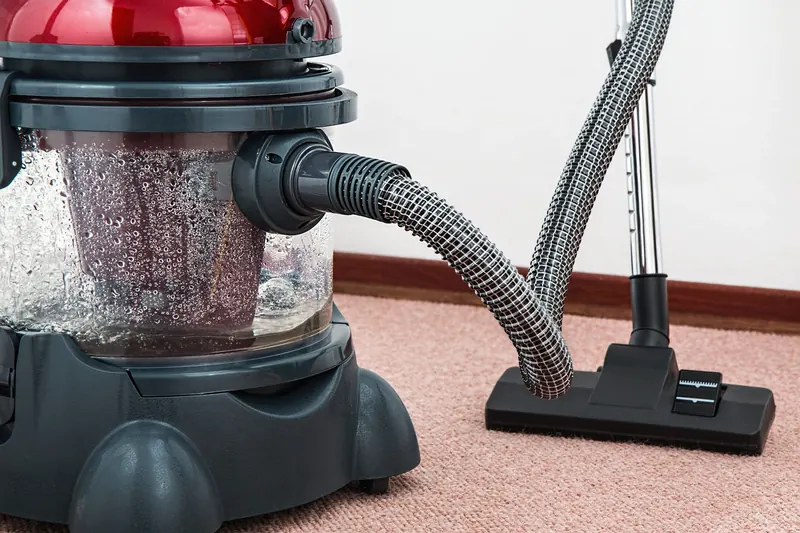
Shopping for a cordless stick vacuum means wading through suction numbers: 130 AW on one box, 210 W on another, 25,000 Pa on a robot next to it. It is tempting to pick the biggest number, but these figures measure different things, and each maker tests in its own way. This explainer sets out what air watts, pascals and watts each describe, why brands choose the figure they do, why you cannot turn one into another from a listing, and why the floor head and sealing matter as much as the headline number when you want the stick with the best suction for your floors.
The three suction figures at a glance
Use this table as a quick key when you read listings. The examples are figures stated in maker listings for models we cover.
| Figure | What it describes | Where you see it | Listing examples |
|---|---|---|---|
| Air watts (AW) | Suction power at the inlet, combining airflow and suction | Dyson, Dreame and many other sticks | Dyson V8 Advanced 130 AW, Dreame Z20 250 AW, Dreame Z30 Ultra 330 AW |
| Pascals (Pa, kPa) | Suction pressure: how hard the vacuum pulls | Robot vacuums, some sticks and handhelds | Robot listings often quote thousands of Pa |
| Suction watts (W) | A maker's own suction power figure in watts | Samsung Bespoke Jet | Bespoke Jet Plus Pro Extra 210 W, AI Jet Ultra 400 W |
| Motor watts (W) | Electrical power the motor draws | Corded vacuums, some cordless listings | AI Jet Ultra lists motor power up to 1050 W |
Air watts: suction power at the inlet
Air watts are a measure of suction power that takes account of both how much air the vacuum moves (airflow) and how strongly it pulls (suction). A machine that pulls hard but moves little air, or moves lots of air with little pull, will not score highly. That makes air watts a more rounded figure than pressure alone.
Makers measure air watts in their own test set-up, usually at the inlet without a floor head and in the highest power mode. Dyson lists 130 AW for the V8 Advanced, and Dyson has widely quoted 230 AW for the V15 Detect, though you should check Dyson's current specification. Dreame lists 250 AW for the Z20 and 330 AW for the Z30 Ultra. Because the test conditions are the maker's own, small differences between brands are not meaningful.
Remember that the top figure applies only in boost. In eco mode, which is how runtimes are measured, the suction is much lower. See cordless vacuum runtime explained.
Pascals and kPa: suction pressure
A pascal is a unit of pressure. On a vacuum, the Pa figure describes the pressure difference the motor can create, roughly how hard it can pull when the airflow is restricted. One kilopascal (kPa) is 1,000 Pa, so 25 kPa and 25,000 Pa are the same figure written two ways.
Robot vacuums nearly always quote Pa, and some sticks and handhelds do too. Pressure on its own says nothing about how much air is moving, and it is airflow that carries dust from the floor into the bin. A high Pa figure with weak airflow may not pick up as well as the number suggests. That is also why a robot's Pa figure cannot be compared with a stick's AW figure. Our stick vs robot comparison covers the wider differences.
Watts: motor power or suction power
Watts can mean two different things on a vacuum listing, so read the wording carefully. Motor watts describe the electrical power the motor draws. Corded vacuums have long quoted this, and it tells you about energy use more than cleaning, because motors and airflow paths vary in how efficiently they turn power into suction.
Some makers quote a suction power figure in watts instead. Samsung lists the Bespoke Jet Plus Pro Extra at up to 210 W of suction, the AI Jet CompleteClean at up to 280 W and the AI Jet Ultra at up to 400 W. The Ultra listing also gives a separate motor power of up to 1050 W, which shows clearly that motor watts and suction watts are not the same thing. Generic wattage fields on shopping sites can mix these up, so rely on the maker's own wording.
Why the figures cannot be converted
AW, Pa and W measure different things: power at the inlet combining airflow and suction, pressure alone, and either electrical input or a maker's own suction measure. To relate them you would need the full airflow and pressure results from the same test, which listings do not publish. Any rule of thumb that turns Pa into AW, or motor watts into air watts, is guesswork.
So compare like with like. Put AW against AW, ideally from the same maker, and treat cross-brand gaps with caution. When brands use different units, look at runtime on the higher modes, head design and bin size instead.
- Same unit, same maker: a fair guide to which model is stronger.
- Same unit, different makers: a rough guide only, as test methods differ.
- Different units: not comparable from listings at all.
Why head design matters as much as the number
Suction figures are usually measured without a floor head. On a real floor, the head decides how much of that power turns into pick-up. A motorised brush bar with stiff bristles agitates carpet pile to loosen dirt. A soft roller suits hard floors and fine dust. Anti-tangle designs keep the brush clear of hair so airflow is not blocked.
Sealing and maintenance matter too. A blocked filter, a full bin or hair wrapped round the brush cuts suction far more than the difference between two motors. Smart features help as well: dirt sensors on models such as the Dyson V15 Detect, Shark PowerDetect and Dreame Z20 raise power only when needed, which saves battery. See Dyson cleaner heads explained and our guide to the best cordless vacuums for carpet.
Stiff bristle motorised head
Suits: Carpet pile and rugs
Soft roller head
Suits: Wood planks, laminate, vinyl
Anti-tangle conical bar
Suits: Tiles and mixed floors with pet hair
Note:Before cleaning a filter, clearing a blockage or removing hair from a brush bar, switch the vacuum off and remove the battery or unplug the charger. Do not use a damaged or swollen battery.
How to choose a stick with strong suction
Our best cordless vacuum cleaners guide lists strong all-rounders, and the Dyson range guide compares Dyson models by their stated figures.
- 1
Shortlist models by floor type and home size first, not by the biggest number.
- 2
Compare suction only within the same unit, and treat cross-brand differences with caution.
- 3
Check the runtime in the higher modes as well as the headline eco figure.
- 4
Pick a head that suits your floors: motorised bristles for carpet, a soft roller for hard floors.
- 5
Look for an anti-tangle brush if you have long hair or pets.
Frequently asked questions
What stick vacuum has the best suction? Among the models we cover, the Dreame Z30 Ultra lists the highest air watt figure at 330 AW. That is the maker's own claim, measured in its own way, and pick-up on your floors also depends on the head, sealing and how long the machine can hold that power.
How many air watts does the Dyson V15 have? Dyson has widely quoted 230 AW for the V15 Detect in its highest mode. Check Dyson's current specification for your exact model, as figures can change between versions.
Is 25,000 Pa better than 200 AW? You cannot tell from those figures. Pascals measure pressure only, while air watts combine airflow and suction, and each maker tests differently. Compare models that use the same unit.
Does a higher wattage mean better suction? Not necessarily. Motor watts describe electrical power drawn, not suction. Some makers, such as Samsung, quote suction in watts, which is a different figure from motor power. Read the listing wording carefully.
What you need
- Check price on AmazonAffiliate link
Dyson V15 Detect Animal: sensor-led suction, 60 min