Fix
Dyson pulsing on and off: causes and fixes
Published
Note: This page contains affiliate links. If you buy through them we may earn a commission at no extra cost to you. Learn more
In short
A Dyson that pulses on and off is usually telling you the airflow is restricted. On most models the motor surges and drops when it senses a blockage or a clogged filter. Empty the bin, wash and fully dry the filter, then check the wand, the bin inlet and the cleaner head for blockages. If it still pulses with clear airflow, the battery may be at fault.
Products for this job
Compare all 7 productsDyson V15 Detect Animal: piezo sensor and LCD readout
Check price on AmazonAffiliate linkDyson V10 Animal: 60 min, mini motorised tool
Check price on AmazonAffiliate linkDyson V11: LCD screen, 3 power levels, 60 min
Check price on AmazonAffiliate link
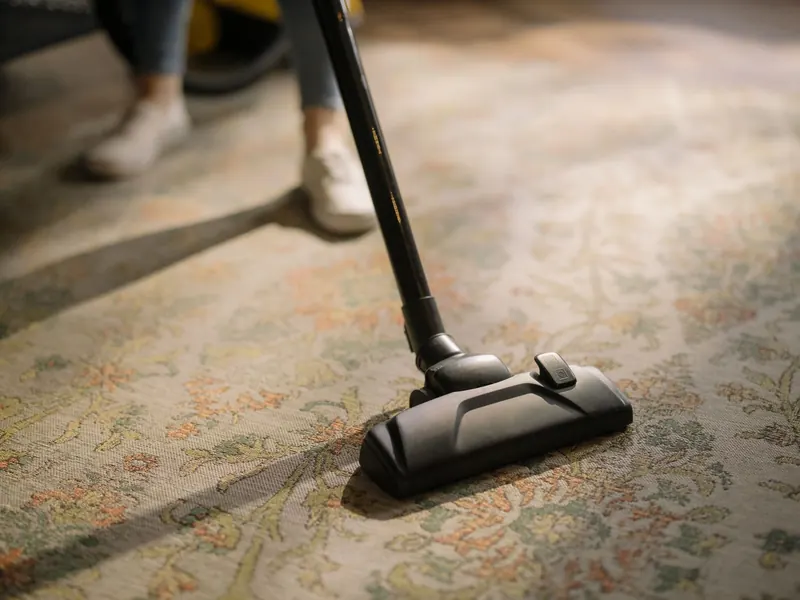
Pulsing is one of the most common Dyson cordless faults, and the good news is that it rarely means the vacuum is broken. On the V8, V10, V11, V15 and newer stick models, Dyson designs the machine to pulse when airflow is restricted, which protects the motor. That makes pulsing a symptom rather than the problem. The fix is to find what is blocking the air and clear it. This guide goes through the checks in the order that finds the cause fastest, from the bin to the cleaner head, and explains when the battery is the more likely culprit. Model details differ, so check your manual or Dyson's support page for your machine.
Why a Dyson pulses
A cordless Dyson pulls air through the cleaner head, up the wand, into the cyclone, through the filter and out past the motor. If anything along that path is blocked, the motor works against a restriction. Rather than run on strain, most models cut power briefly and restart, which you hear as a regular surging or pulsing. A clogged filter has the same effect, because fine dust blocks the air even when the bin looks empty.
Less often, pulsing can come from the battery. A worn pack may not hold its voltage under load, so the motor stutters. Battery faults usually come with other signs, such as short runtime or flashing lights, which helps tell them apart.
Checks in order: fastest first
Work through these steps one at a time and test the vacuum after each. That way you know which one fixed it. Most pulsing is solved by step two or three.
- 1
Empty the bin, even if it looks only half full. Fine dust packed around the cyclone shroud can restrict airflow.
- 2
Remove and wash the filter. On the V8 there is a pre-filter in the top of the cyclone and a post-motor filter at the back. On the V10, V11 and V15 there is usually a single filter unit on the end of the cyclone.
- 3
Remove the wand and run the vacuum with no tools fitted. If the pulsing stops, the blockage is in the wand or cleaner head.
- 4
Look through the wand towards a light and clear anything inside.
- 5
Check the inlet at the bottom of the bin where the wand connects. Hair balls and grit often lodge here.
- 6
Turn the cleaner head over, remove the brush bar if your head allows it, and clear hair and debris from the bar and the neck.
- 7
Refit everything, making sure the filter is fully dry and clicked in place.
Note:Remove the battery or take the vacuum off the charger before you clear blockages or remove the brush bar. Never put your fingers into the inlet while the machine can run.
The filter: wash it and dry it fully
A filter clogged with fine dust is the single most common cause of pulsing. Dyson commonly advises rinsing the filter in cold water only, with no detergent, until the water runs clear, then leaving it to dry fully, typically for at least 24 hours. A filter that is still damp when refitted restricts airflow just as badly as a dirty one and can make the pulsing come straight back. If you need to use the vacuum sooner, a spare genuine filter for your model avoids the wait.
Check the filter seal too. If it is not seated correctly, the machine may behave oddly, and on models with an LCD screen you may see a filter message. Our guide on how to clean a Dyson and its filters shows the steps for each model.
Hidden blockages: where to look
If the filter is clean and dry and the bin is empty, the blockage is somewhere you have not looked yet. Common spots are listed below. A useful test is to run the vacuum with each section detached in turn: body only, then body with wand, then body with wand and head. The pulsing starts when you add the blocked part.
- Inside the wand, especially where it bends towards the joints.
- The bin inlet, where the wand meets the cyclone.
- The neck of the cleaner head, behind the brush bar.
- Under the brush bar end cap on Direct Drive and Motorbar heads.
- Small tools such as the crevice tool or mini motorised tool, if pulsing only happens with them.
When it is the battery
If airflow is clear and the vacuum still pulses, or it pulses mostly near the end of a charge, the battery may be worn. Lithium-ion packs lose capacity with age and charge cycles, and older V8 batteries are a common case. Signs include runtime much shorter than it used to be, the machine cutting out in MAX mode but not in Eco, or a flashing light on the battery. Dyson's manuals describe what the lights mean on each model, so check yours rather than guessing.
On the V8 the battery is held by screws and can be replaced. On some newer models the battery clicks out. Use a genuine Dyson pack or a reputable compatible one for your exact model. Our V8 battery replacement guide covers the options, and why a cordless vacuum keeps cutting out explains the other battery checks.
Note:Do not use a battery pack that is damaged, swollen or gets very hot. Stop using it and contact Dyson or a qualified repairer. Recycle old packs at a battery recycling point, never in household waste.
If nothing works
If you have cleared every blockage, fitted a clean dry filter and the pulsing continues, contact Dyson support with your serial number. The machine may be under guarantee, and Dyson can usually run through model-specific checks. If you are thinking about a newer machine instead, our Dyson cordless vacuums compared guide sets out how the current range differs from the V8.
Frequently asked questions
Why is my Dyson V8 pulsing after I washed the filter? The filter is probably still damp, which restricts airflow. Dyson commonly advises drying it fully, typically for at least 24 hours. Remove it and let it dry longer, then check the wand and head for blockages too.
Is pulsing bad for the motor? Pulsing is a protective response to restricted airflow. It is a sign to stop and clear the blockage rather than keep cleaning. Running it repeatedly in that state is best avoided.
Why does my Dyson only pulse on the floor head? If it runs smoothly with the wand alone but pulses with the head fitted, the blockage is in the head. Remove the brush bar and check the neck behind it.
Can a dead battery cause pulsing? It can. A worn pack may not hold enough voltage under load, so the motor stutters. If airflow is clear and runtime is short, a replacement battery is the likely fix.
What you need
- Check price on AmazonAffiliate link
Dyson V15 Detect Animal: sensor-led suction, 60 min
- Check price on AmazonAffiliate link
Shark Stratos Pet Pro: 2.16 kg in use, removable battery